


Do I Need Orientation and Mobility Training?
May 12, 2026 | Leave a Comment
by Mandi Hetzel, COMS, CVRTTags: Guide dog, O&M Training, white cane
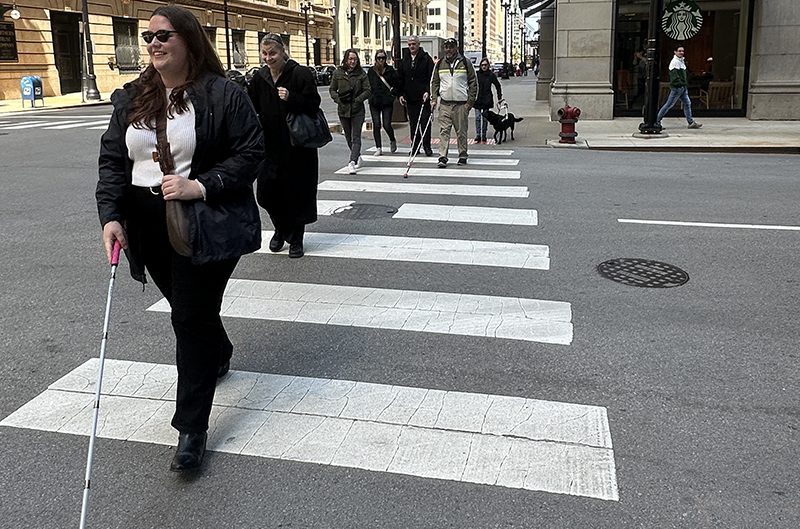
When your vision is impaired, at some point you ask yourself, “Do I need to use a white cane?”
It may be hard to accept that your vision is the reason you are stumbling over curbs, falling on uneven pavement, or not leaving home as often as you used to. But these are signs you may need orientation and mobility training (O&M).
Remember, impaired vision is not reliable vision. Your remaining vision can be negatively affected by weather conditions or moving from bright sunlight into a dim building. Good mobility skills will help you safely navigate with less dependence on your vision.
How do you know when you are ready for O&M training?
You should consider O&M training if you are:
- feeling confined staying at home
- nervous about leaving home without another person
- falling or tripping over curbs or uneven pavement
- fearing being hit by vehicles.
- worrying about falling off a train platform
- getting lost
- craving some social connection and wanting to be more independent
How does O&M training help you?
O&M training helps you learn how to navigate your environment with greater independence. It teaches you how to understand where you are, develop a plan, and get to where you want to go. Because O&M is both physical and mental, you will also learn to use your other senses to help you travel.
What else can O&M do for you?
Your training is specific to your individual goals and can encompass many skills including:
- walking with a human guide
- communicating with the general public to get correct and useable information
- planning a route to the laundry room in your building or the coffee shop on the corner
- crossing streets
- riding buses and trains
- preparing for guide dog travel
- using GPS apps to confirm you are on the right track
What does it take to be successful with O&M training?
The key to being successful with your orientation and mobility training is practice and consistency. Practicing on your own, or with the help of a friend or family member in between lessons, will help you progress more quickly and increase your skill level. And the better your skills, the more places you will feel comfortable going to on your own. Take advantage of other workshops and events offered by agencies in your area. Second Sense offers group workshops, Hadley Helps has some good podcasts, and YouTube has videos that can be helpful.
How can I receive orientation and mobility training?
Please be aware that this type of training usually has a long wait time. We recommend planning ahead and contacting more than one agency for training. You can contact Second Sense for O&M training and discuss your mobility needs and challenges. We can also provide other orientation and mobility resources that may be suitable for you.
Mandi is the Certified Orientation and Mobility Specialist at Second Sense